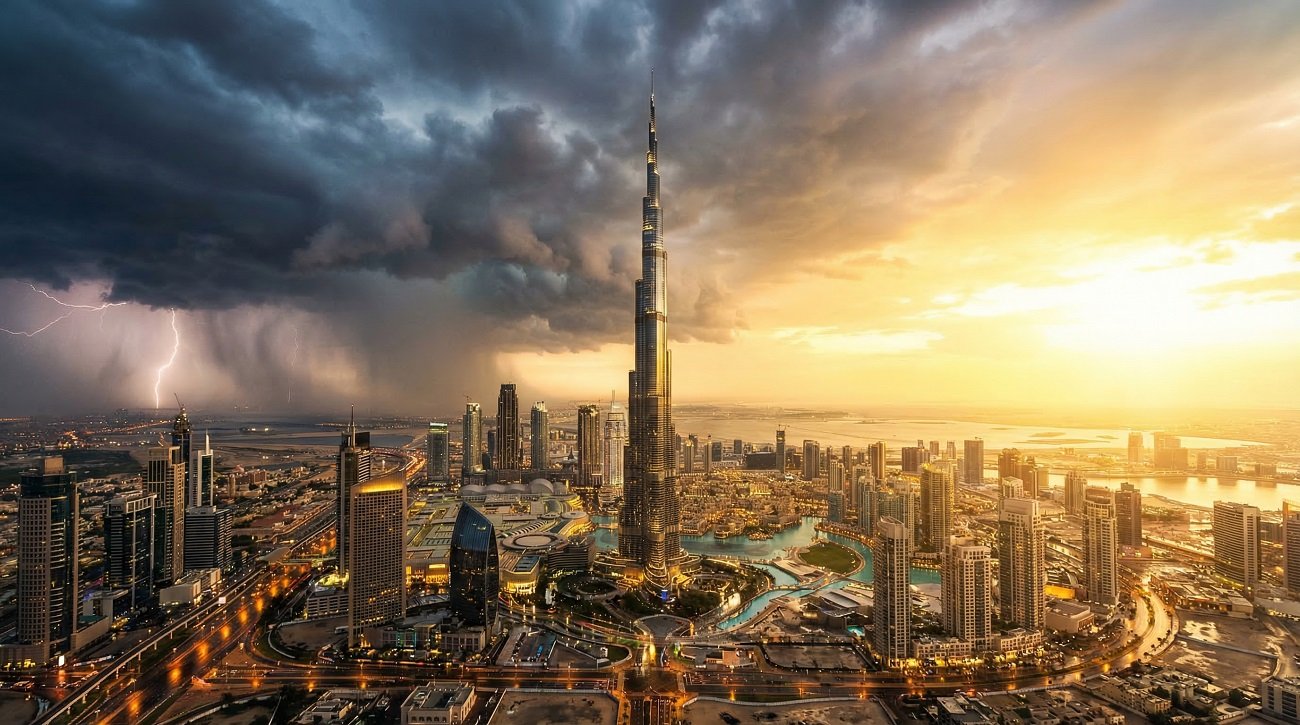
Missiles have struck UAE soil. Airspace has closed. The Strait of Hormuz has slowed to a near-standstill. And the headlines are saying what they always say: Dubai is finished.
We’ve heard this before. Three times, in fact.
In 2009, when property prices fell 60% and Dubai World asked to pause $59 billion in debt. In 2020, when GDP crashed 11.8% and two-thirds of tourists disappeared overnight. And in 2022, when the Russia-Ukraine war was supposed to trigger a property bubble collapse.
Each time, the prediction was wrong. Not because the crisis wasn’t real, it was. But because the people making predictions didn’t look at the data.
We did. This analysis uses official figures from the Dubai Statistics Centre (DSC), Dubai Land Department (DLD), Dubai Department of Economy and Tourism (DET), the Central Bank of the UAE (CBUAE), the IMF, Knight Frank, and Henley & Partners to show exactly what happened after each crisis and what the pattern tells us about March 2026.
What’s Actually Happening Right Now (March 2026)
Let’s start with what’s real. Since February 28, 2026, when US-Israeli strikes on Iran triggered a regional war:
• Over 1,700 missiles and drones have been fired toward the UAE since the conflict began, with more than 90% intercepted by the country’s air defence systems, according to the UAE Ministry of Defence.
• Airspace has been temporarily closed, and several international airlines have suspended Middle East services.
• The Strait of Hormuz has seen shipping slow dramatically, with hundreds of oil tankers stalled.
• Dubai’s stock market dropped sharply the DFM real estate index lost over 15% in one week.
• Some expats and tourists have left or postponed travel plans.
This is serious. No one should minimise it.
But here’s what’s also true: Dubai’s real estate market is still transacting. The Dubai Land Department recorded 3,570 property sales worth AED 11.93 billion ($3.24 billion) in the week of March 2–9, 2026. The second week (March 9–15) saw a 51% increase in transaction value to AED 15.66 billion and a 58% jump in transaction counts, according to DLD data analysed by The Real Estate Reports.
The physical property market is not collapsing. It is pausing, adjusting, and based on the latest weekly data already rebounding.
The question isn’t whether there’s disruption. The question is: how long does it last?
For that answer, we need to look at what happened the last three times.
Crisis #1: The 2008 Global Financial Crash
What Hit Dubai
The 2008 crisis wasn’t just a dip it was an existential test.
• GDP declined 2.7% from AED 304,767 million (2008) to AED 296,559 million (2009), according to the Dubai Statistics Centre’s official constant-price series.
• Property prices fell 40–60% from their 2008 peak in many areas. The DLD’s pricing data shows unit prices had surged 70% from AED 6,928/sqm (2007) to AED 11,775/sqm before the correction hit.
• Dubai World announced a debt standstill on approximately $59 billion in November 2009.
• Over $300 billion worth of construction projects were scaled back, frozen, or cancelled entirely.
• By 2012, Dubai had an estimated excess supply of 65,000 housing units.
The media consensus at the time? Dubai’s model was broken. The city had overreached. It was over.
What Dubai Actually Did
• The UAE Central Bank extended a US$10 billion, five-year loan to the Dubai Government in March 2009.
• Abu Dhabi injected US$6.3 billion in December 2009 specifically to cover Dubai World’s debt obligations, with total support reaching approximately $20 billion.
• RERA introduced escrow accounts and tightened credit regulations not as a reaction, but as a permanent structural reform.
• The government accelerated economic diversification away from pure real estate dependency, strengthening tourism, trade, logistics, and financial services.
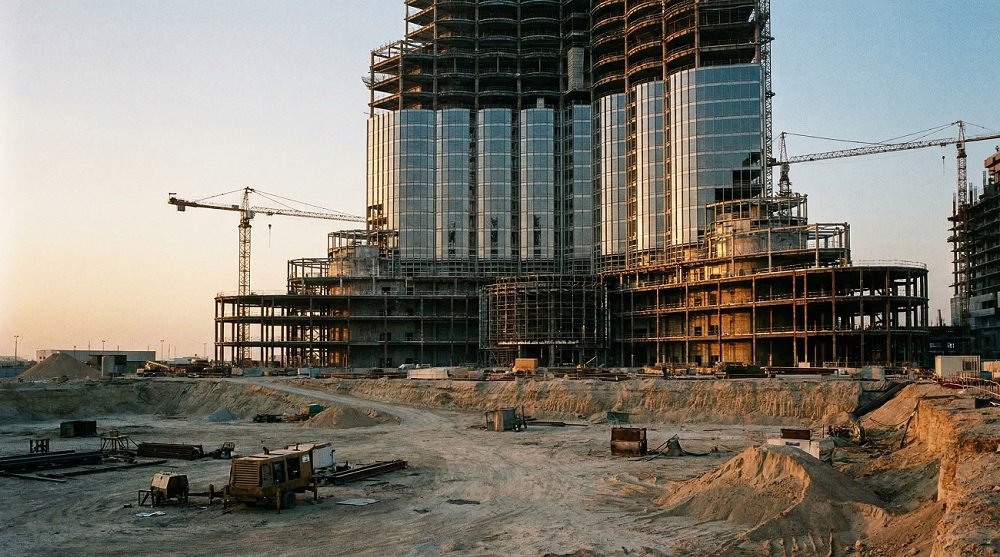
And here’s the detail most people miss: Burj Khalifa was completed in December 2009 at the absolute bottom of the crash. Dubai Metro launched in September 2009. While the world was writing obituaries, Dubai was building the tallest structure on earth.
How Long the Recovery Took
| Indicator | Pre-Crisis | Trough | Recovery |
| GDP (AED M) | 2008: 304,767 | 2009: 296,559 (−2.7%) | 2011: 313,526 — exceeded 2008 |
| Unit prices (AED/sqm) | 2007: 6,928 | 2011 dip | 2011–12: 10,700–10,900 |
| Foreign trade (AED M) | 2008 benchmark | 2009: 488,525 | 2010: 575,661 |
| Stock market | Pre-crash peak | 2009: severe decline | 2013: DFM +108% in 1 year |
Sources: Dubai Statistics Centre; DLD Annual Report 2024; IMF Article IV (2011)
GDP recovery: approximately 2 years. Full real estate price recovery: approximately 5 years (2013–2014).
Crisis #2: COVID-19 (2020)
What Hit Dubai
COVID was, by the numbers, far worse than 2008.
• GDP contracted 11.8% from AED 412,077M (2019) to AED 363,404M (2020). That’s more than four times the 2008 decline.
• International visitors collapsed 67% from 16.73 million (2019) to just 5.51 million (2020).
• Hotel occupancy fell from 75% to 54%. DXB airport crashed from 86M to 18.2M passengers.
• FDI plummeted 74%. Dubai’s expat population dropped 8.4% steepest in the Gulf.
• Apartment rents fell 12%. Villas bottomed at AED 7,575/sqm (DLD data).
What Dubai Actually Did
• AED 1.5B stimulus announced March 12, 2020, 11 days after the first COVID case.
• AED 256B TESS programme launched by the Central Bank within 48 hours, expanded from initial AED 100B.
• July 2020: Dubai became one of the first major cities on earth to reopen to tourism.
• Expo 2020 delivered on time 24.1 million visits, 192 countries participating.
• Golden Visa expanded. 100% foreign ownership allowed. Remote work visas introduced.
How Long the Recovery Took
| Indicator | 2019 | 2020 | 2022 | 2024 | 2025 |
| GDP (AED M) | 412,077 | 363,404 | 415,297 | 442,942 | +4.8% UAE |
| Visitors | 16.73M | 5.51M | 14.36M | 18.72M | 19.59M |
| Hotel occ. | 75% | 54% | ~73% | 78.2% | — |
| RE value | ~162B | ~148B | 392B | 761B | 540B res. |
| Villa /sqm | ~8,100 | 7,575 | ~11,400 | 14,605 | — |
Sources: DSC; DET; DLD Annual Report 2024; IMF; Global Property Guide
GDP recovery: approximately 2 years. Tourism exceeded 2019 by 2023. RE transactions hit all-time records by 2021 and set new records every year since.
An off-plan villa bought at the 2020 bottom of AED 7,575/sqm would be worth AED 14,605/sqm by 2024 a gain of 93%. A hypothetical AED 1 million purchase in 2020 would be valued at approximately AED 1.93 million today. Plus rental yields of 6.9% annually.
Crisis #3: The Russia-Ukraine War (2022)
The Russia-Ukraine war was supposed to trigger a property bubble collapse. Instead, the opposite happened. Dubai didn’t decline, it exploded.
• Russian investment in Dubai residential real estate increased more than tenfold an estimated $6.3 billion (ICIJ / EU Tax Observatory).
• Property prices rose 124% from 2020 levels by 2024 (Knight Frank).
• 7,200 millionaires relocated to the UAE in 2024, #1 globally for the third year (Henley & Partners).
• RE transactions hit AED 761B in 2024, all-time record. 226,000 transactions. 110,000 new investors (+55%).
• FDI reached AED 52.3B in 2024 (+33% YoY) per the Dubai FDI Monitor.
No recovery was needed because Dubai never declined. It absorbed the shock through its position as a neutral, tax-free, globally connected hub and accelerated.
The Pattern: Recovery Gets Faster Every Time
| 2008 Crash | COVID (2020) | Russia-Ukraine | |
| GDP impact | −2.7% | −11.8% | No decline — growth |
| Property | −40 to −60% | −12% rents; 7,575 bottom | +124% since 2020 |
| Tourism | Moderate decline | −67% (16.7M→5.5M) | 14.36M→19.59M record |
| Recovery (GDP) | ~2 years | ~2 years | N/A — no dip |
| Recovery (RE) | ~5 years | Immediate — records by 2021 | Immediate boom |
| Capital flows | Flight; $107B debt | FDI −74%; pop −8.4% | FDI +33%; 7,200 HNWI |
| Policy | $20B bailout; RERA | AED 256B TESS; Expo; Golden Visa | D33 Agenda; RE Strategy 2033 |
Sources: DSC; DLD; DET; IMF; CBUAE; Henley & Partners; Knight Frank; ICIJ
Why March 2026 Is Different in Dubai’s Favour
The current situation is genuinely serious. But the structural position entering this crisis is fundamentally different from 2008 or 2020.
| Factor | 2008 / 2020 | 2026 |
| Debt | $107B hanging over Dubai | AED 52.3B FDI flowing in |
| Economy | Dependent on RE or tourism | Diversified: trade, finance, tech, RE, logistics |
| Buyers | Speculation + easy credit | 82.4% cash buyers — minimal systemic risk |
| Population | Expats fleeing (−8.4% in 2020) | 7,200 millionaires arrived in 2024 |
| GDP | Mid-cycle or declining | AED 442,942M — all-time high |
| Tourism | Coming off a weak base | 19.59M visitors in 2025 — strongest ever |
| Defence | Limited capability | 90%+ missile interception rate demonstrated |
What This Means for Investors and Buyers
We are not giving investment advice. What we are doing is showing you what happened with verified numbers the last three times people panicked and left.
• In 2009, those who bought at the bottom saw prices recover fully by 2013–2014, with the stock market rising 108% in one year.
• In 2020, those who bought off-plan villas at AED 7,575/sqm saw their property reach AED 14,605/sqm by 2024 a 93% gain.
• In 2022, those who stayed and invested rode a wave that took transactions to AED 761 billion and attracted 110,000 new investors in a single year.
The pattern is consistent: short-term panic → government response → structural reform → record-breaking growth. Every single time.
The people who left during the panic always regretted it. The people who stayed or bought didn’t.
The Government’s Crisis Playbook
One factor that separates Dubai from almost every other market is the speed and decisiveness of government response.
• 2008: CBUAE $10B loan + Abu Dhabi $6.3B injection. RERA structural reforms. Immediate.
• 2020: AED 1.5B stimulus within 11 days. AED 256B TESS within 48 hours. First major city to reopen globally.
• 2022: Golden Visa expanded. 100% foreign ownership. D33 Agenda launched with public KPIs.
The pattern is crisis → reform → growth. Not hope a system. And that system is already operating in March 2026.
The Bottom Line
Yes, there is a war. Yes, missiles are being intercepted over the UAE. Yes, some people are leaving. Yes, off-plan activity has slowed temporarily.
But the data from three previous crises verified through official DSC, DLD, DET, IMF, and CBUAE sources shows one consistent outcome: Dubai comes back. Fast. And stronger than before.
The only question left is whether you’ll watch this recovery from the sidelines, or be part of it.
FAQ – Dubai Real Estate and the Iran War 2026
Is Dubai real estate safe to invest in during the Iran war?
Based on official data from three previous crises (2008, 2020, 2022), Dubai’s property market has recovered every time with recovery periods getting shorter. GDP, tourism, and real estate transactions have reached all-time highs before each subsequent crisis. The market enters 2026 from a historically strong position, with 82% cash buyers and minimal systemic leverage.
Will Dubai property prices crash because of the war?
In the week of March 2–9, 2026, the DLD recorded 3,570 property sales worth AED 11.93 billion. The following week saw a 51% increase in value. While short-term sentiment shifts are expected, analysts including Knight Frank, S&P Global, and ANAROCK describe the current situation as a temporary pause rather than a structural collapse.
Should I buy off-plan in Dubai right now?
Off-plan buyers during the 2020 COVID panic when sentiment was arguably worse than today saw villa prices rise 93% in four years (AED 7,575 to AED 14,605 per sqm, per DLD data). RERA escrow protections remain fully in place, and Dubai’s regulatory framework is significantly stronger than during previous crises.
How fast did Dubai recover from previous crises?
From the 2008 crash: GDP recovered in approximately 2 years; full property recovery took about 5 years. From COVID-19: GDP surpassed 2019 levels within 2 years; real estate transactions hit records by 2021. From the 2022 Russia-Ukraine shock: no recovery was needed the market accelerated immediately.
Are people leaving Dubai because of the war?
Some expats and tourists have departed or delayed plans, similar to what happened during COVID (when population fell 8.4%). However, the historical pattern shows that every time people left, new investors and residents replaced them with 110,000 new real estate investors and 7,200 millionaires arriving in 2024 alone.