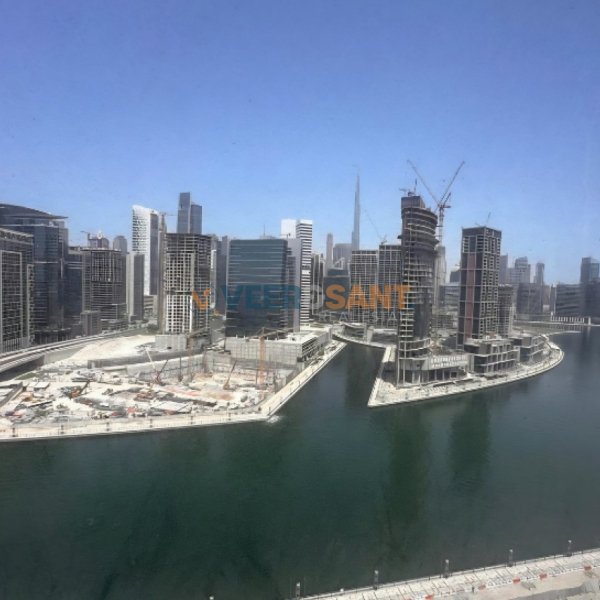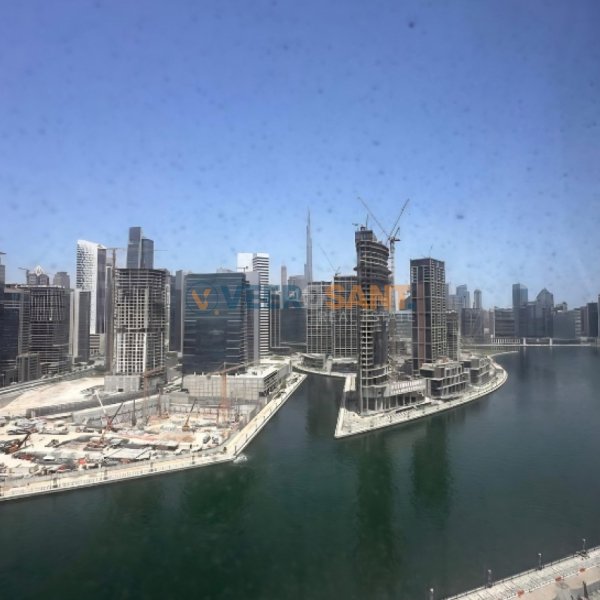
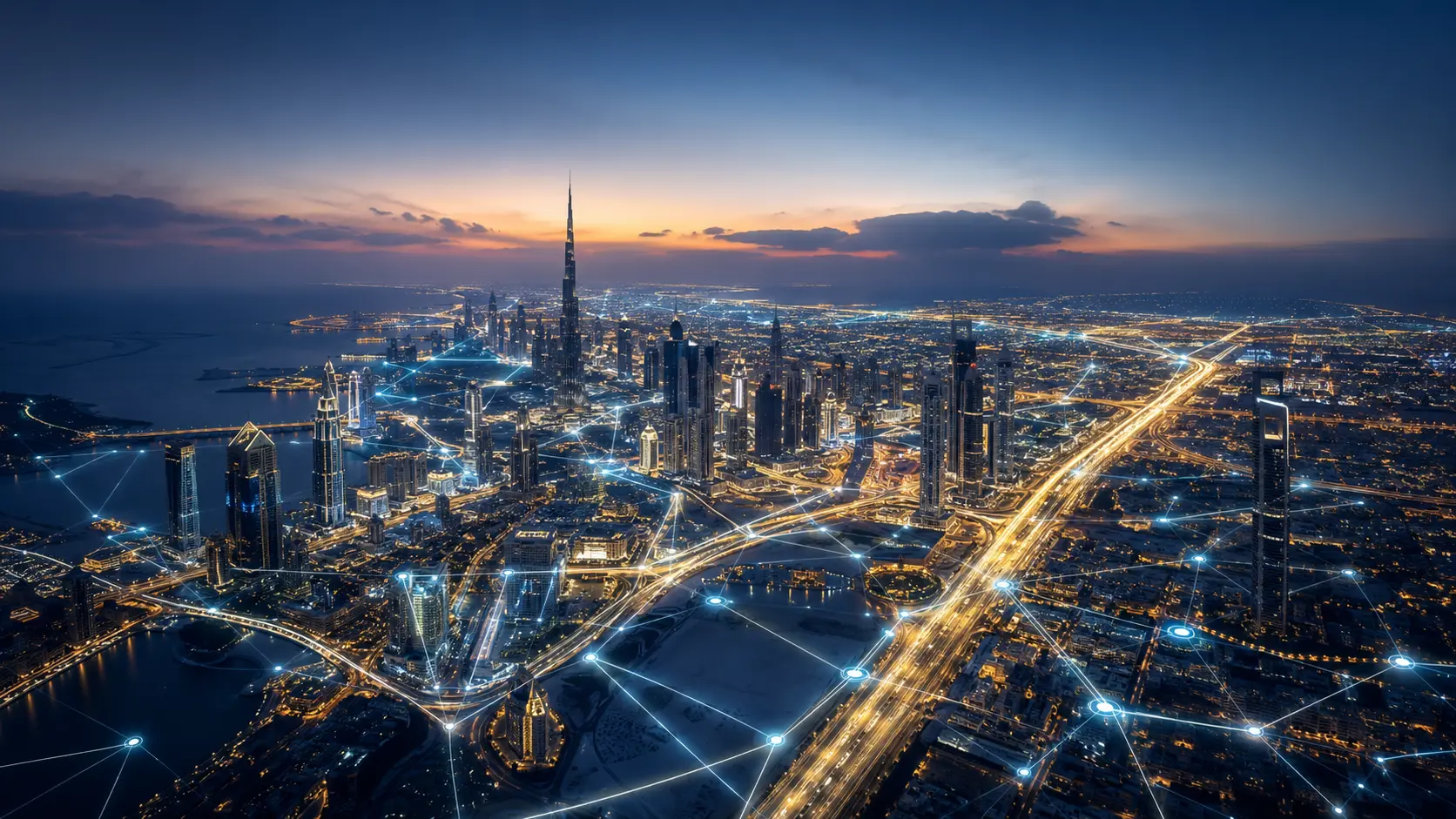
“The Dubai 2033 plan officially shifted from a visionary goal to a concrete, funded reality on July 1, 2026. On this day, Dubai’s Executive Council approved nine projects worth AED 18 billion in a single sitting. Most news coverage treated these as nine separate headlines, but read together, they reveal the specific machinery now being bolted onto the promise Dubai made in 2023: to double its economy by 2033. This is what that promise looks like once it becomes concrete, dated, and ready for construction.”
The promise, and the paperwork behind it
Every city sells a vision. Dubai’s is unusually specific and unusually large. Under the Dubai Economic Agenda D33 — launched in January 2023 by Sheikh Mohammed bin Rashid Al Maktoum — the emirate committed to doubling the size of its economy over ten years, lifting GDP to AED2.6 trillion by 2033 and generating some AED32 trillion in cumulative economic activity along the way. The same agenda targets foreign trade of AED25.6 trillion (up from AED14.2 trillion), AED650 billion in cumulative foreign direct investment, and a place among the world’s top three cities to live, work and invest.
Those are round, headline numbers. The problem with round numbers is that nobody knows how a city actually gets there. That is exactly why the 1 July meeting matters more than a typical news cycle suggested. Chaired by Crown Prince Sheikh Hamdan bin Mohammed, the Executive Council did not announce a new vision. It approved the plumbing for the existing one — nine initiatives spanning transport, culture, trade, investment, education, digital governance and finance. Each is a brick. The wall is 2033.
Below, we group the nine into the three questions that actually decide whether a city grows: can people move? Do they want to live there? And will capital invest? Then we translate all of it into what it means if you own, rent or are buying property in Dubai.
Move: unclogging the spine of the city
First Al Khail Street — the parallel spine
Sheikh Zayed Road is Dubai’s aorta, and for years it has been narrowing under its own success. The Council’s answer is the First Al Khail Street Development Plan: a 15-kilometre elevated carriageway running parallel to Sheikh Zayed Road, with three lanes in each direction. Officials project it will cut peak-hour travel times on the corridor by roughly 51 per cent and add capacity for around 9,000 more vehicles per hour, serving an estimated 2.6 million residents and opening cleaner access to Al Barsha, Al Quoz, Business Bay and Meydan.
The dates are the part investors should underline. Construction is scheduled to run from Q3 2027 to Q4 2030. That is a rare thing in city planning: a named congestion-relief corridor with a delivery window, attached to four specific districts. Infrastructure that is announced with a date behaves very differently from infrastructure that is merely aspired to — it is bankable, and markets price it in early.

Live: the softer infrastructure of a top-three city
You cannot become one of the world’s three most liveable cities on roads alone. Four of the nine decisions are quietly about whether Dubai feels like a place people choose to stay — the difference between a boom town and a home.
Dubai Cultural Strategy 2033
The most ambitious of the four is the Dubai Cultural Strategy 2033, a 40-initiative programme spanning cultural innovation, heritage preservation and talent development. Its targets: support more than 6,000 local creative talents, attract a comparable wave of international creatives, expand the emirate’s cultural assets by more than 200 per cent, and lift the cultural and creative sector’s contribution to 5.4 per cent of GDP. Culture is not decoration here; it is an economic sector with a GDP line and a public-private partnership pipeline worth AED2.75 billion.
Dubai Population Now
Perhaps the most underrated item is Dubai Population Now, a real-time population census run by the Dubai Data and Statistics Establishment. It replaces the old model — plan for the city you had at the last count — with a live population clock powered by AI and smart forecasting. For housing, health and transport planning, that means the city can react to where people are actually moving, not where they were two years ago. It is also, for anyone who studies demand, an unusually honest data source about which neighbourhoods are filling up.
Emirati Talents in Education & the new Address System
Two further decisions round out liveability. The Emirati Talents Strategy in Private Education targets 3,000 Emirati educators in private schools by 2033, deepening national participation in a sector that serves a largely expatriate population. And a redesigned address system identity — new, locally-inspired signage rolling out across 186 areas by 2029 — tackles a genuinely daily frustration: finding your way, and being found, in a city that grew faster than its maps.
Invest: making capital feel welcome
The final three decisions are aimed squarely at the D33 investment targets — and they are the ones most likely to move property demand.
The Dubai Investor Register
The Dubai Investor Register unifies investor records into a single system, letting companies operate across multiple zones without re-registering each time. It sounds administrative. It is actually friction removal at scale — and friction is what keeps foreign direct investment cautious. This register feeds directly into the D33 goal of AED650 billion in FDI by 2033, the same figure that circulated on the original announcement graphics. For property, foreign capital and real-estate demand tend to move together; a smoother investor pathway is rarely neutral for prices.

Customs Strategy 2030 and the Islamic Finance Centre
The Dubai Customs Strategy 2030 targets faster trade flows, stronger economic partnerships and tighter security — the operational backbone behind lifting foreign trade toward AED25.6 trillion. Alongside it, the Global Centre for Technology and Innovation in Islamic Finance, managed by DIFC, positions Dubai in a market projected to reach $9.31 trillion by 2030, complete with an innovation challenge for Islamic banks and start-ups and a Future Islamic Finance Forum slated for November 2026. Together they signal where Dubai wants the next decade of capital to come from — and Islamic home financing sits squarely inside that story.
The whole plan on one page
Here is how the nine decisions map onto the 2033 blueprint — the through-line most coverage missed:
| Decision (1 July 2026) | What it builds | 2033 payoff / timeline |
| First Al Khail Street | 15 km elevated road, 3 lanes each way, parallel to Sheikh Zayed Road | ~51% faster peak commute; +9,000 vehicles/hr; build Q3 2027–Q4 2030 |
| Dubai Cultural Strategy 2033 | 40 initiatives across talent, heritage and creative industries | Cultural sector to 5.4% of GDP; cultural assets +200%; by 2033 |
| Dubai Population Now | AI real-time population clock for live urban planning | Sharper housing, health and transport planning; live now |
| Dubai Investor Register | One unified investor record across all zones | Feeds the AED650bn FDI target by 2033 |
| Dubai Customs Strategy 2030 | Faster trade flow, stronger partnerships, tighter security | Supports foreign trade rising to AED25.6tn; by 2030 |
| Islamic Finance Centre | DIFC-run global hub for Islamic fintech | Positions Dubai in a $9.31tn sector by 2030 |
| Emirati Talents in Education | Emiratisation strategy for private schools | 3,000 Emirati educators by 2033 |
| Address System Identity | New locally-inspired signage and navigation identity | Rolled out across 186 areas by 2029 |
Figures per Dubai Media Office, The National, Khaleej Times and Gulf Business, 1 July 2026. D33 targets per the UAE Government (u.ae) Dubai Economic Agenda.
What it means if you own, rent or are buying
Strip away the ceremony and three practical signals remain.
- For investors: the Al Khail corridor is the clearest catalyst. Al Barsha, Al Quoz, Business Bay and Meydan gain a named, dated congestion fix — and improved access historically supports values well before ribbon-cutting. The window that matters is before the Q3 2027 groundbreaking, when the benefit is still theoretical rather than priced in.
- For residents and landlords: Dubai Population Now turns demand forecasting from guesswork into a live feed. Watch which districts the population clock shows filling — that is where rental demand hardens and where void risk falls.
- For businesses and overseas buyers: the investor register and the customs and Islamic-finance strategies all pull in one direction — lower friction for foreign capital. That is the demand-side engine behind the AED650 billion FDI goal, and property is usually one of its first destinations.
The honest part: 2033 is a schedule, not a switch
It is worth saying plainly, because most coverage will not. None of this is instant. The Al Khail carriageway is a 2030 completion. The address system reaches full rollout in 2029. The cultural and education targets are dated to 2033. What was approved on 1 July is a credible, funded schedule — not a change you will feel next quarter. The smart posture is neither hype nor cynicism, but timing: understand the delivery windows, and position ahead of them rather than after.
That, in the end, is the real story the nine headlines obscured. Dubai did not merely announce AED18 billion of spending. It published, decision by decision, the route from a slogan — double the economy by 2033 — to something you can put in a calendar. For anyone whose money or home is tied to this city, the calendar is the asset worth reading.
Work with Veer & Sant
Deciding how the 2033 roadmap should shape your Dubai portfolio — which corridors, which timing, which structure — is exactly the conversation we have every day. Book a 30-minute call with Veer & Sant for acquisition, advisory or portfolio strategy grounded in the numbers above.