Four weeks ago, the Gulf changed overnight. Military strikes, cancelled flights, and panicked headlines swept across the region. If you own property in Dubai, Abu Dhabi, or anywhere in the GCC, your first thought was probably: is this the crash?
The answer is no. But the longer answer is more interesting, and more useful if you are a buyer, seller, or investor trying to decide what to do next.
We went through the latest Knight Frank Weekly Market Sentiment data, cross-referenced it with Bloomberg, Zawya, Gulf News, and CNBC reporting, and broke down the numbers into plain language.
Here is what four weeks of conflict actually look like in the data.
The Numbers at a Glance: Not What You Expect
Before we go into detail, here is a snapshot that separates what is struggling from what is holding up:
| Indicator | Qatar | UAE | Saudi Arabia |
| Flights vs. pre-conflict | -92% | -61% to -68% | -3% to -22% |
| Hotel rates | Down 8% | Down 16-31% | Down 7-22% |
| Stock market | -7% | -17% to -30% | +4.5% |
| Rental listings | -1% | +2.4% (Dubai) | +1.5% (Riyadh) |
Source: Knight Frank Weekly Regional Real Estate Market Sentiment Update, Week 4 (30 March 2026)
Dubai Flights Are Down, But the Freefall Has Stopped
Dubai International Airport handled just 2,547 flights in the week of 23-29 March, down from 8,053 in the week before the conflict. That is a 68% drop, and it sounds alarming.
But here is the part the headlines miss: the number has been flat for three consecutive weeks. The freefall happened in the first week. Since then, flight movements have stabilised around 2,500-2,600 per week. This is not a market in continued decline. It is a market that has absorbed a shock and found a new, temporary floor.
Why flights matter for property
Flights are a leading indicator. When flights recover, property viewings, tourism spending, and business activity follow within weeks. The stabilisation we are seeing now is the first step toward that recovery.
Correction, Not Crash: What the Data Actually Shows
This is the most important section of this article. The word “crash” has been thrown around in social media and some news outlets. The data does not support that word.
What international media are actually saying
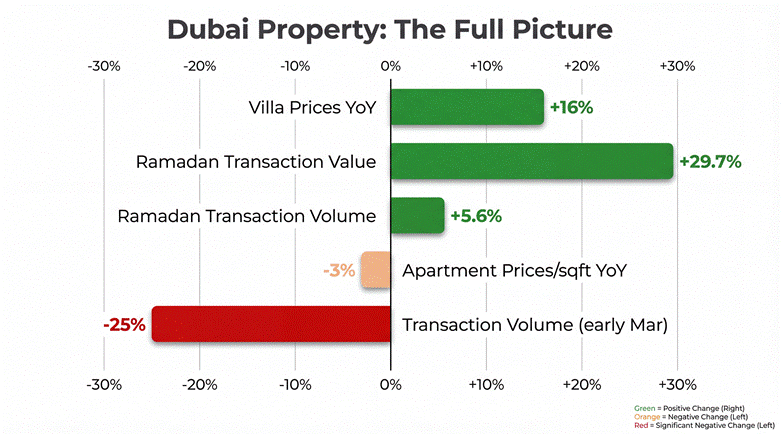
World Property Journal reported that property transactions in the first half of March fell about 25% in volume, but called it a “liquidity freeze, not a valuation collapse.” Median apartment prices per square foot declined only 3% year-on-year, while villa prices actually rose 16%.
Bloomberg reported that some developer bonds have come under pressure, but also noted that UAE developers have rushed to reassure investors, with many industry experts expressing confidence that the structural case for Dubai remains intact.
Gulf Business asked “how long can the Dubai real estate market hold?” and the answer from analysts was: the fundamentals that drove the boom (population growth, business formation, global capital flows) have not disappeared.
Zawya reported something remarkable: during Ramadan 2026 (18 February to 19 March), Dubai recorded 15,196 property transactions worth AED 50.58 billion. That is a 5.63% increase in volume and a 29.7% increase in value compared to the same period last year, right in the middle of the conflict.
CNBC spoke to expats who stayed in Dubai and described life as “functioning but tense.” Gulf News reported residents expressing trust in the UAE’s security infrastructure, with one headline reading: “Dubai is going to protect us.”
Life in Dubai Continues: Security, Business, and Daily Reality
One of the biggest misconceptions outside the region is that daily life in Dubai has ground to a halt. It has not.
- The UAE operates advanced defence systems including THAAD, Patriot, and IRIS-T, running 24/7. Dubai is positioned over 150 km from any active conflict zone.
- Around 95% of major attractions remain open to visitors. The metro, taxis, restaurants, and malls are operating normally.
- The UAE Central Bank announced a 1 trillion dirham ($270 billion) resilience package on 18 March to ensure liquidity and economic stability.
- Rest of World reported that Dubai’s tech expat community sees the conflict as temporary and is continuing to invest in the city.
- Dubai’s ranking as the 7th Global Financial Centre (GFCI index) remains intact, reinforcing its role as a business hub.
Note: The English and international media narrative is important to understand: outlets like Bloomberg, CNBC, Gulf News, and Rest of World are not describing a city in collapse. They describe a market that is adjusting, a population that is adapting, and an economy that has structural depth beyond tourism. The word that keeps appearing in coverage is “correction” and “resilience”, not “crash.”
Dubai Rental Demand Is Still Growing
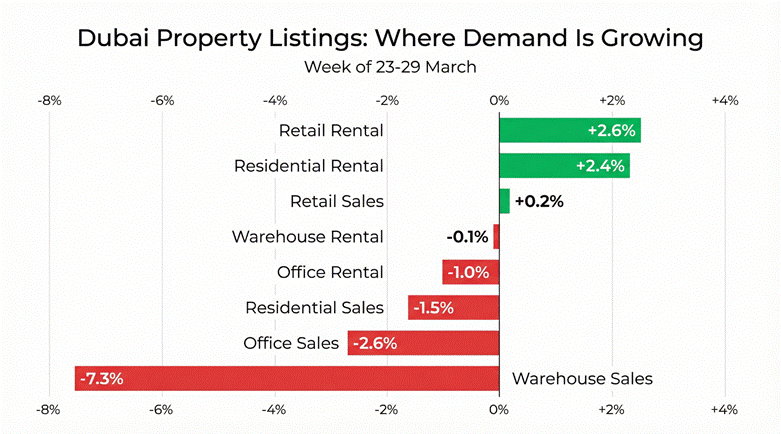
This is perhaps the most surprising data point in the Knight Frank report. While flights are down 68% and hotel rates have dropped 16%, residential rental listings in Dubai actually grew 2.4% in the last week.
Why? Because the people who drive rental demand, the 3.5 million-plus expats who live and work in Dubai, are still here. They still need homes. Their companies are still operating. Schools are still open. This is structural demand, not tourist demand, and it behaves very differently during a crisis.
Retail rental listings also grew 2.6%, suggesting that commercial activity at the neighbourhood level is holding up.
The Hidden Story: Construction Costs Are Rising
While everyone is watching prices and flights, something important is happening behind the scenes. The cost of building new properties is going up, and it is going up fast.
| Material | Since Conflict | Since January |
| Bitumen (roads, waterproofing) | +15.5% | +23.9% |
| Aluminium (windows, facades) | +8.9% | +11.0% |
| PVC (pipes, fittings) | +7.7% | +14.6% |
| Hot-rolled steel coil | +2.9% | +10.6% |
| Shipping surcharges | +10-15% | N/A |
What this means for you: if you already own a property that is built and delivered, rising construction costs mean your asset is becoming more expensive to replicate. That is a floor under your property’s value. If you are considering off-plan purchases, ask your developer whether they have locked in material contracts, and factor in potential delays.
Saudi Arabia: A Bright Spot Worth Watching
Saudi Arabia has shown notable stability during this period. The Saudi TASI stock index is up 4.5% since the conflict began, Riyadh flights are virtually back to normal at just 3.1% below last year, and a $4 billion contract was awarded for King Salman Park in Riyadh – a signal that mega-project investment continues at pace.
But this does not diminish the Dubai story. The two markets serve different roles in the Gulf economy. Dubai remains the region’s most liquid, most internationally connected property market, with a regulatory framework, lifestyle offering, and rental yield profile that no other Gulf city currently matches. The Ramadan transaction data – 15,196 deals worth AED 50.58 billion during the conflict – proves that buyer appetite for Dubai has not disappeared. It has paused temporarily.
What the Saudi data does tell us is that the Gulf as a whole is not falling apart. Regional capital is active, projects are moving forward, and investor confidence exists within the GCC. For Dubai-focused buyers, that regional stability is actually a positive signal: it means the economic engine around Dubai is still running, and recovery – when it comes – will have strong regional tailwinds behind it.
What Should Property Buyers Do Right Now?
If you are a buyer looking at Dubai
This is a moment of reduced competition. Transaction volumes are down 25%, which means fewer buyers are competing for properties. Prices have not collapsed. Villa prices are still up 16% year-on-year, and apartment prices have only adjusted 3%. If you have been waiting for the market to cool, this may be the window, but it will not last forever. When flights recover, so will demand.
If you are a landlord
The rental data is on your side. Listings are growing because demand is holding. The expat population has not left. Occupancy fundamentals remain strong. This is not the time to panic-sell a rental asset.
The Bottom Line
Four weeks of conflict have shaken confidence, grounded flights, and created uncertainty. But the data tells a more nuanced story than the headlines.
Dubai is experiencing a correction, not a crash. Rental demand is growing. Transaction values hit records during Ramadan. Construction costs are rising, putting a floor under existing property values. And Saudi Arabia has emerged as the Gulf’s safe-haven market.
The biggest risk right now is not the conflict itself. It is making decisions based on fear instead of data.
| Want to understand how these market conditions affect your portfolio? Book a free consultation with our team for a personalised market briefing. |
→ Book your free consultation at: https://veersant.com/consultation
Or call us directly: +971 4 254 7443 | hello@veersant.com