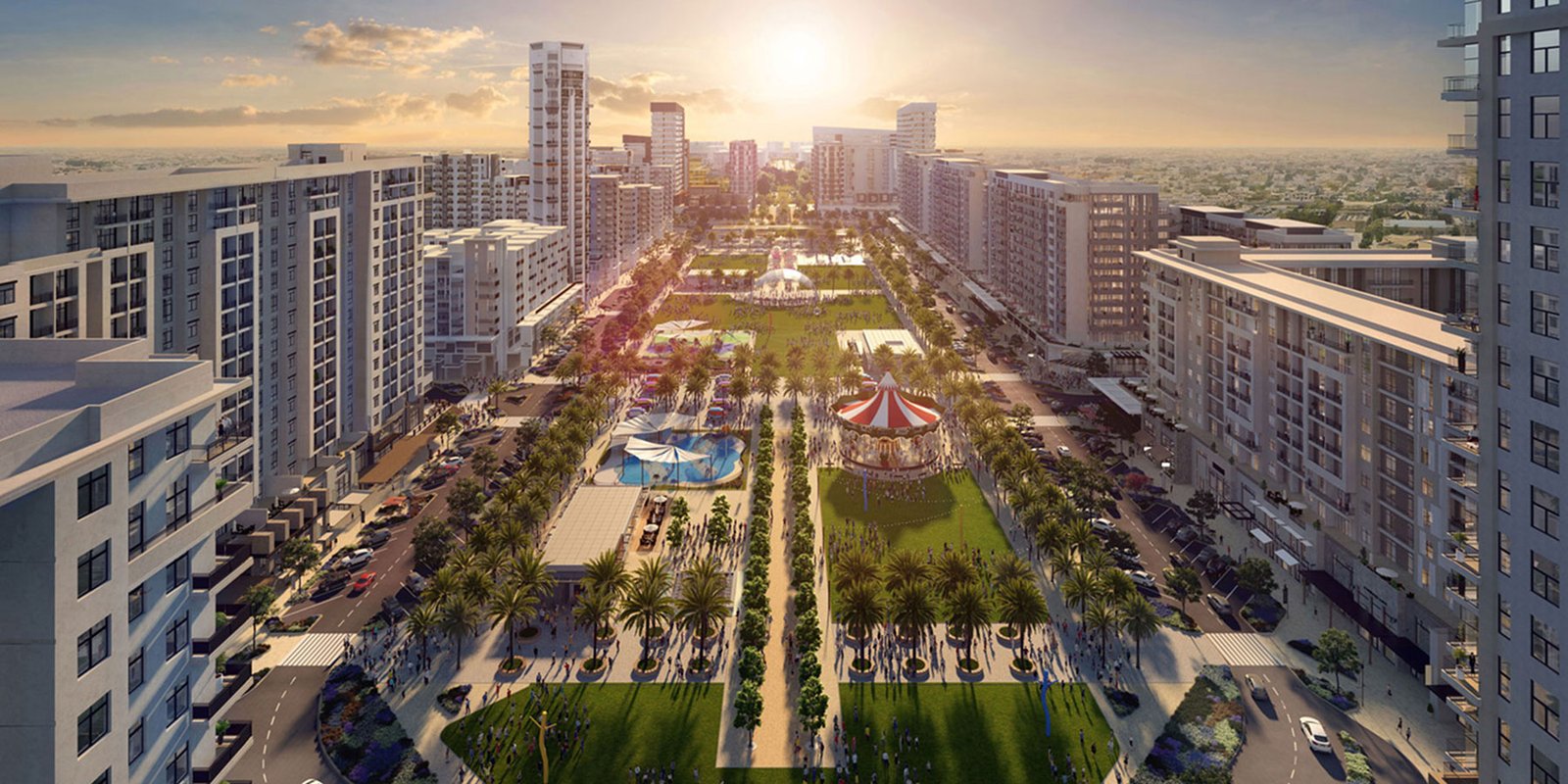
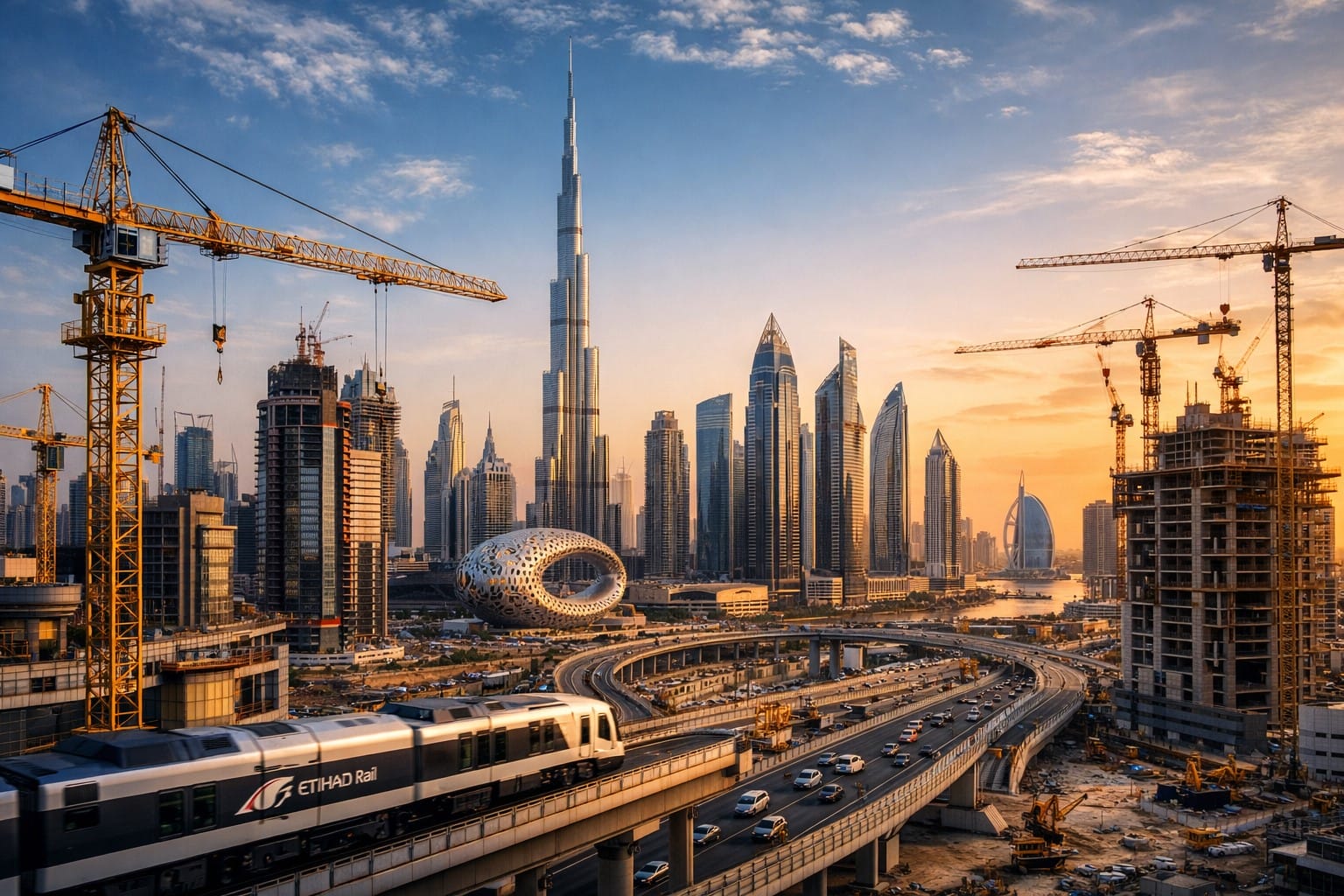
Dubai is no longer just a city of skyscrapers; it is evolving into a hyper-connected, sustainable global powerhouse. Guided by the Dubai 2040 Urban Master Plan, the city is investing billions into infrastructure set to reach critical milestones by 2026.
For property investors, the message is clear: the map of “prime real estate” is being redrawn. In this guide, we explore the 10 Dubai major infrastructure changes transforming property values and why the current window represents the ultimate opportunity for off-plan property investment strategies.
1. The Etihad Rail: Connecting 11 Emirates
The Etihad Rail passenger stations represent the most significant shift in the UAE’s transport history, moving the nation toward a rail-based economy.
Bridging the Emirates
By 2026, this network will connect 11 major cities and logistics hubs across the seven emirates. This means a professional can live in a luxury villa in Dubai and commute to Abu Dhabi or Fujairah in less than 50 minutes.
Impact on Peripheral Property Values
Historically, rail connectivity is the strongest driver of suburban growth. We expect Dubai South and the outskirts of Al Furjan connectivity to see a massive surge in demand. Properties near planned Etihad Rail stations are projected to see capital appreciation of 20-30%, as “commutable distance” becomes a key selling point for international renters.
2. The Dubai Loop: The 93km Sustainable Highway
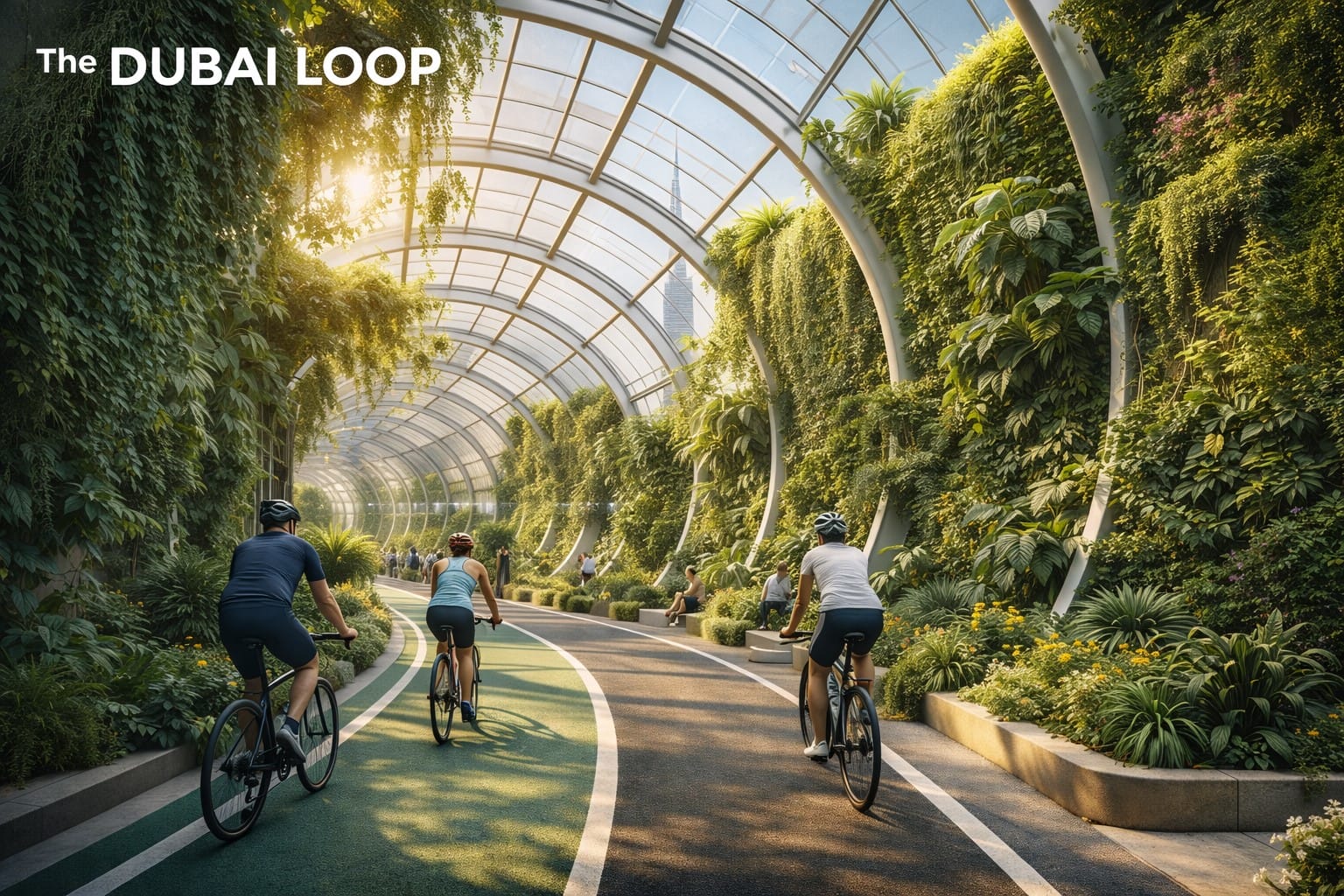
The Dubai Loop project is a climate-controlled, 93km cycling and walking highway that will encircle the city, aiming to make Dubai the most active city on earth.
Promoting the 15-Minute City
The Loop is designed to allow residents to reach essential services within a short walk or bike ride. This reduces carbon footprints and enhances the quality of life in connected districts.
The “Wellness Premium” in Real Estate
Communities that provide direct access to the Loop will become “Wellness Communities.” Investors should look at existing developments that this corridor will plug into. These areas will command higher rental yields due to the global trend of sustainable living in Dubai, where health-conscious tenants are willing to pay a 10-15% premium for active-living amenities.
3. Al Maktoum International Airport (DWC) Expansion
The recent announcement of the AED 128 billion terminal at Al Maktoum Airport expansion is a game-changer for the entire southern corridor of the city.
A New Global Gateway
By 2026, the shift of operations from DXB to DWC will be well underway. DWC is set to become the world’s largest airport, with a capacity for 260 million passengers annually.
Buying Property in Dubai South
Dubai South is no longer a “future play” it is a present necessity. The area is becoming a massive logistics and residential hub. The expansion will drive immense demand for short-term rentals, crew housing, and hospitality assets, making Dubai South logistics zones a goldmine for early investors.
4. The Metro Blue Line: Opening New Corridors
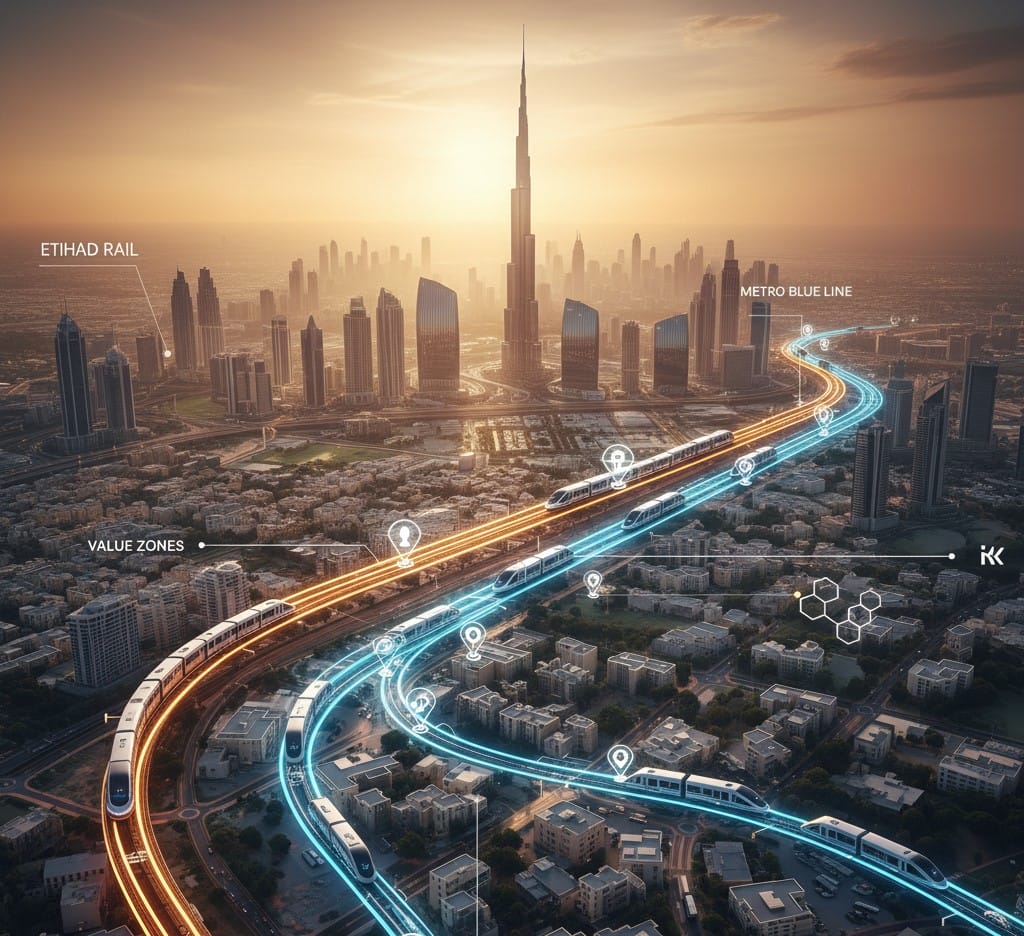
The Blue Line Metro route is the next phase of Dubai’s mass transit evolution, bridging the gap between the existing Red and Green lines.
Connecting High-Density Hubs
The Blue Line will serve over 200,000 residents in areas like Dubai Silicon Oasis, Mirdif, and Academic City. These areas have long been considered “car-dependent,” but the Metro will unlock their full potential.
The “Metro Effect” on Capital Appreciation
Data from the initial Metro launch shows that Dubai metro extension property value typically rises by 15-25% upon completion. For investors, the Blue Line represents a low-risk opportunity to capture rental income from connected communities that were previously undervalued.
5. Air Taxis: Launching the World’s First Vertiports
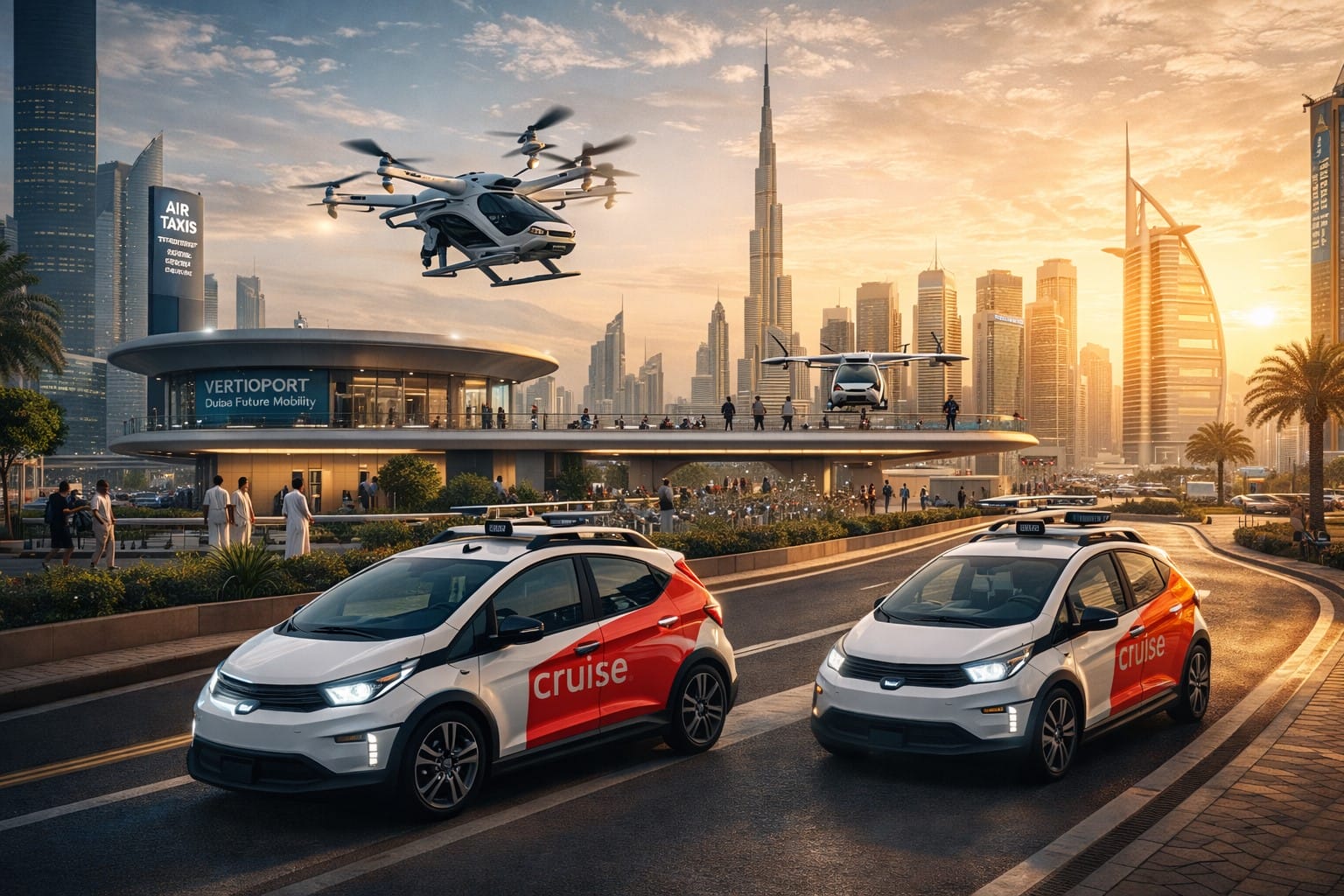
Dubai has officially locked in 2026 for the launch of commercial flying taxis, reclaiming its title as the “City of the Future.”
Strategic Vertiport Locations
With vertiport locations at Dubai Mall, Palm Jumeirah, Dubai Marina, and DXB Airport, the city is creating a sky-high transit layer for high-net-worth individuals.
Boosting Luxury Property Prestige
Flying taxis Dubai services will add a “prestige premium” to luxury towers. Buildings equipped with landing pads or those located near vertiports will see enhanced capital appreciation, as ultra-high-net-worth investors prioritize time-saving technology and status.
6. Robotaxis and Autonomous Transport Zones: A Key Pillar of Dubai Major Infrastructure Changes
The RTA is aggressively rolling out Robotaxis on Sheikh Zayed Road in partnership with Cruise, aiming to make 25% of all trips autonomous by 2030.
Redefining Urban Mobility
By 2026, autonomous transport zones will be a common sight. These self-driving fleets will reduce traffic congestion and the need for private car ownership among younger residents.
Impact on Building Design and Parking
As autonomous vehicles in Dubai become mainstream, we will see a shift in green building codes. Future developments may require less parking space, allowing developers to repurpose those areas into high-value amenities like gyms or co-working spaces, increasing the building’s overall ROI.
7. Smart Parking and “Parkin” Systems
The privatization and digital transformation of Dubai’s parking (via Parkin smart systems) are changing the way residents interact with the city.
Efficiency Through Technology
The new smart system uses AI to manage parking occupancy and pricing, making the process seamless for residents in high-traffic areas like Business Bay and JLT.
Resale Value of Dedicated Parking
In an increasingly regulated environment, residential units with deeded, smart-integrated parking spots will become more valuable. This is a subtle but important factor in real estate trends for 2026, where convenience and “smart” integration are key buyer requirements.
8. Transition to Sustainable Real Estate & Green Codes
Dubai is enforcing stricter green building codes to align with its Net Zero 2050 goal, moving sustainability from an “option” to a “requirement.”
The Rise of Eco-Friendly Communities
Developments like The Oasis by Emaar and Sustainable City Dubai are seeing record-breaking off-plan sales. These projects use recycled water, solar energy, and sustainable materials to lower operational costs.
Attracting the Ethical Investor
International investors are increasingly looking for ESG-compliant assets. Sustainable real estate Dubai offers lower utility bills for tenants and higher long-term value for owners, as these buildings are less likely to require expensive retrofitting in the future.
9. Biometric Banking and Paperless Transactions
Digital infrastructure is the “invisible” force driving property values. The transition to biometric banking security is making the investment process faster and safer.
Securing International Capital
The SMS OTP phase-out in favor of biometrics ensures that international investors can manage their Dubai portfolios with top-tier security.
Paperless Efficiency
Combined with paperless property transactions, the entire lifecycle of an investment from purchase to resale can now be managed digitally. This transparency and ease of use significantly boost investor confidence, especially for those managing assets from abroad.
10. Social Infrastructure: The “Year of the Family” Legacy
The Year of the Family initiative has led to a surge in “soft infrastructure” investment, such as parks, elite schools, and community healthcare centers.
Strengthening Family-Friendly Areas
This initiative is driving the growth of wellness communities and suburban hubs. Districts that offer a holistic family lifestyle are seeing the most stable price growth.
Long-Term Retention and Yields
Family-friendly areas with new infrastructure (like Arabian Ranches III or Tilal Al Ghaf) tend to have lower turnover rates. For investors, this translates to consistent rental income and lower vacancy periods, making them ideal for long-term wealth preservation.
ROI Projections: How Dubai Major Infrastructure Changes Drive Value
Analyzing the Infrastructure Impact
The data is clear: infrastructure drives value. Below is a projection of how these changes are expected to affect property portfolios by 2026-2027.
| Infrastructure Project | Expected Capital Appreciation | Rental Yield Improvement |
| Etihad Rail Connectivity | 20% – 30% | 3% – 5% |
| Metro Blue Line Extension | 15% – 25% | 2% – 4% |
| DWC Airport Expansion | 25%+ (Long term) | 4% – 6% |
| Sustainable/Smart Retrofits | 10% – 15% | 2% – 3% |
Conclusion: Capitalizing on Dubai Major Infrastructure Changes
In 2026, the value of a property in Dubai will not be measured solely by its square footage or aesthetic appeal. Instead, it will be measured by its connectivity, how seamlessly residents can access the airport, how efficiently they can reach the Metro, and how sustainably they can integrate with the city’s green corridors.
From the high-speed Tesla tunnel network to the comprehensive Dubai 2040 Urban Master Plan, every Dubai major infrastructure change is a deliberate step toward making the city the world’s most attractive hub for global talent and capital. For the savvy investor, the strategy remains simple yet powerful: follow the infrastructure. The districts being connected today are the ones that will deliver the most substantial capital appreciation and rental yields tomorrow.
The window of opportunity to buy at current prices is narrowing. As these projects move from the planning stage to operational reality, the “speculation premium” will vanish, and the “utility value” will drive prices to new heights.
Don’t Invest Blindly – Get a Strategic 2026 Portfolio Analysis
The 2026 infrastructure shift is a once-in-a-decade opportunity, but not every property near a station will deliver the same ROI. At Veersant, we help you distinguish between a good marketing pitch and a high-yield investment.
Ready to secure your spot in Dubai’s future? Join our elite circle of international investors who are already positioning themselves ahead of the curve. Contact us today to navigate these Dubai major infrastructure changes with confidence.