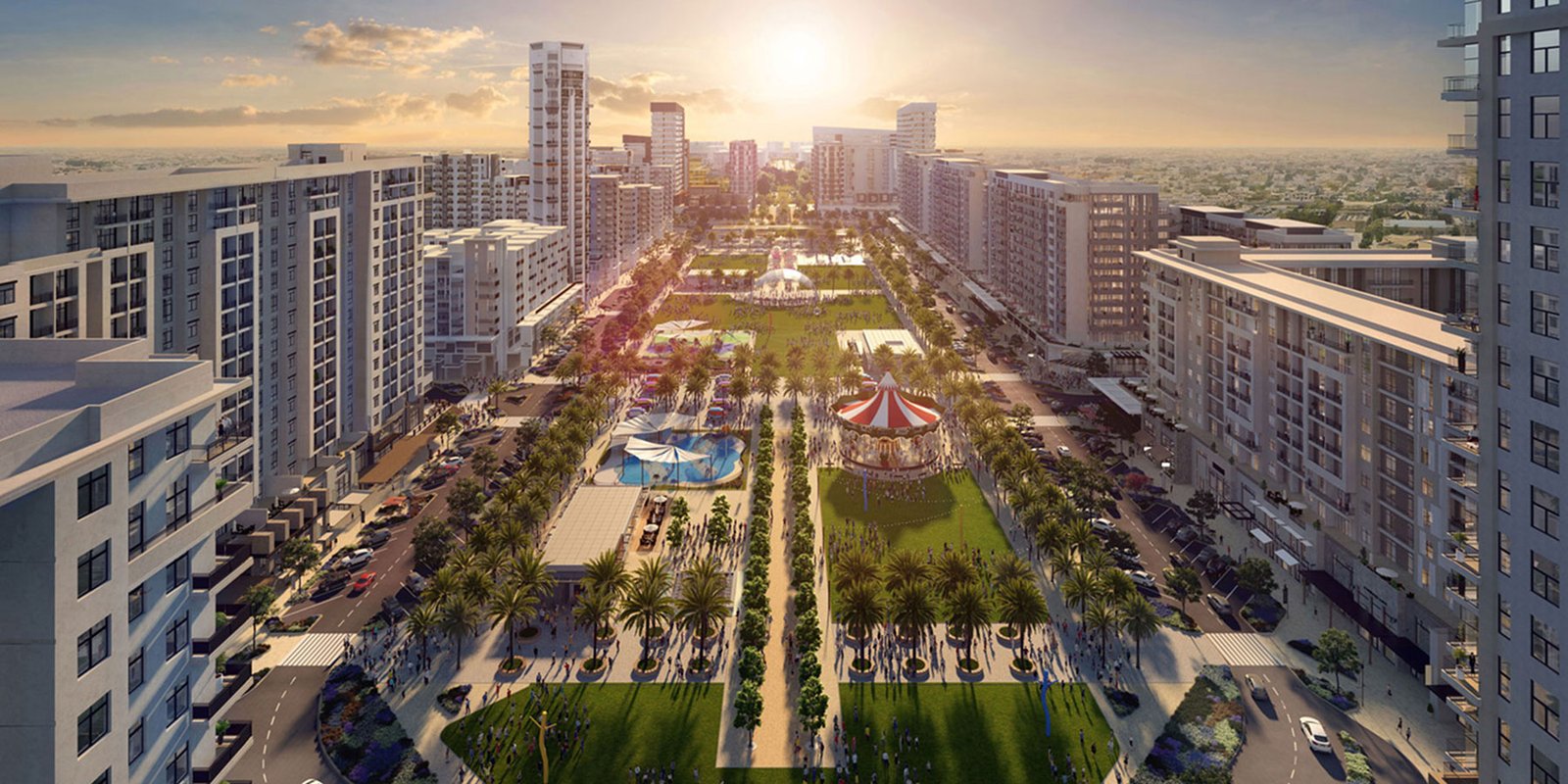

Something remarkable has happened to the map of global wealth over the last decade, and Dubai sits at the center of it. For most of the 20th century, the world’s rich were relatively fixed, anchored by businesses, family, and limited mobility. That assumption has quietly collapsed. In 2026, the world’s wealthiest people move like sovereign wealth funds allocate capital: across jurisdictions, hedging risk, and chasing opportunity. And more of them are choosing the United Arab Emirates than anywhere else on Earth.
This isn’t marketing spin. It’s what the data from Henley & Partners, New World Wealth, and Knight Frank consistently shows. Below, we break down exactly how fast Dubai is growing, why it’s happening, and whether the boom can last.
How fast is Dubai’s millionaire population actually growing?
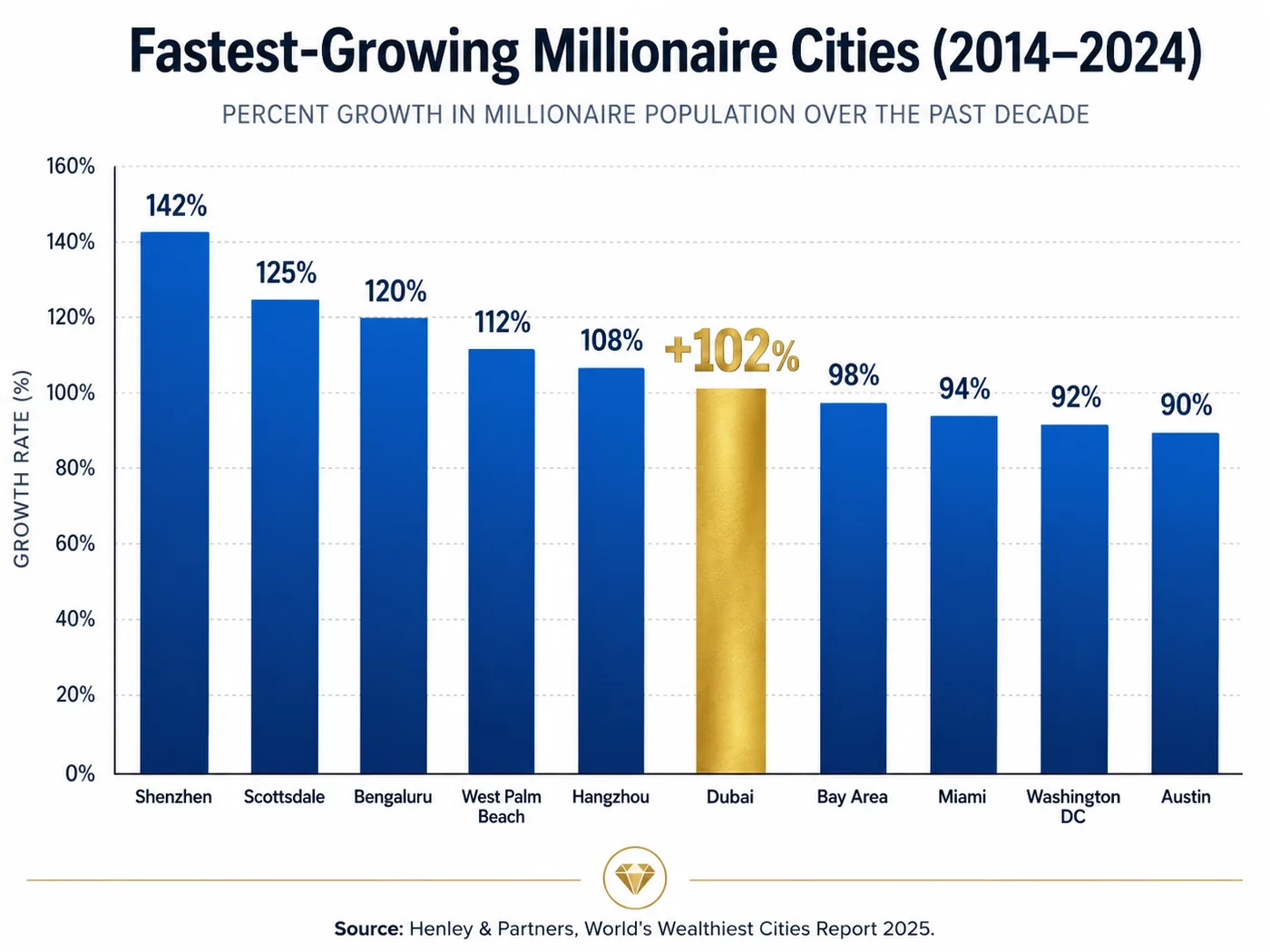
Dubai’s millionaire population grew 102% between 2014 and 2024 — the highest decade-long growth rate of any city in the global top 50, according to Henley & Partners’ World’s Wealthiest Cities Report 2025.
To put that in perspective, no established financial capital came close. New York, London, and Tokyo grew slowly from enormous bases; even fast-rising Singapore managed “only” 62%. Dubai more than doubled its millionaire count, lifting the city from 21st to 18th among the world’s wealthiest cities.
Here is where Dubai ranks on the list of the fastest-growing millionaire cities of the decade:
| Rank | City | Country | Millionaire growth (2014–2024) |
|---|---|---|---|
| 1 | Shenzhen | China | +142% |
| 2 | Scottsdale | USA | +125% |
| 3 | Bengaluru | India | +120% |
| 4 | West Palm Beach | USA | +112% |
| 5 | Hangzhou | China | +108% |
| 6 | Dubai | UAE | +102% |
| 7 | Bay Area | USA | +98% |
| 8 | Miami | USA | +94% |
| 9 | Washington DC | USA | +92% |
| 10 | Austin | USA | +90% |
Source: Henley & Partners, World’s Wealthiest Cities Report 2025.
What makes Dubai’s position on this list distinctive is that it is the only city in the Middle East to appear at all — and unlike the American entries, whose growth is partly domestic wealth creation in tech and finance, Dubai’s rise is driven overwhelmingly by wealthy people moving in from abroad.
As of the latest data, Dubai is home to roughly 81,200 resident millionaires, 237 centi-millionaires (individuals worth USD 100 million or more), and 20 billionaires. Abu Dhabi is following the same curve, and both Emirati cities are projected to more than double their centi-millionaire populations over the next ten years.
Why millionaires are moving to Dubai: Inside the world’s #1 destination
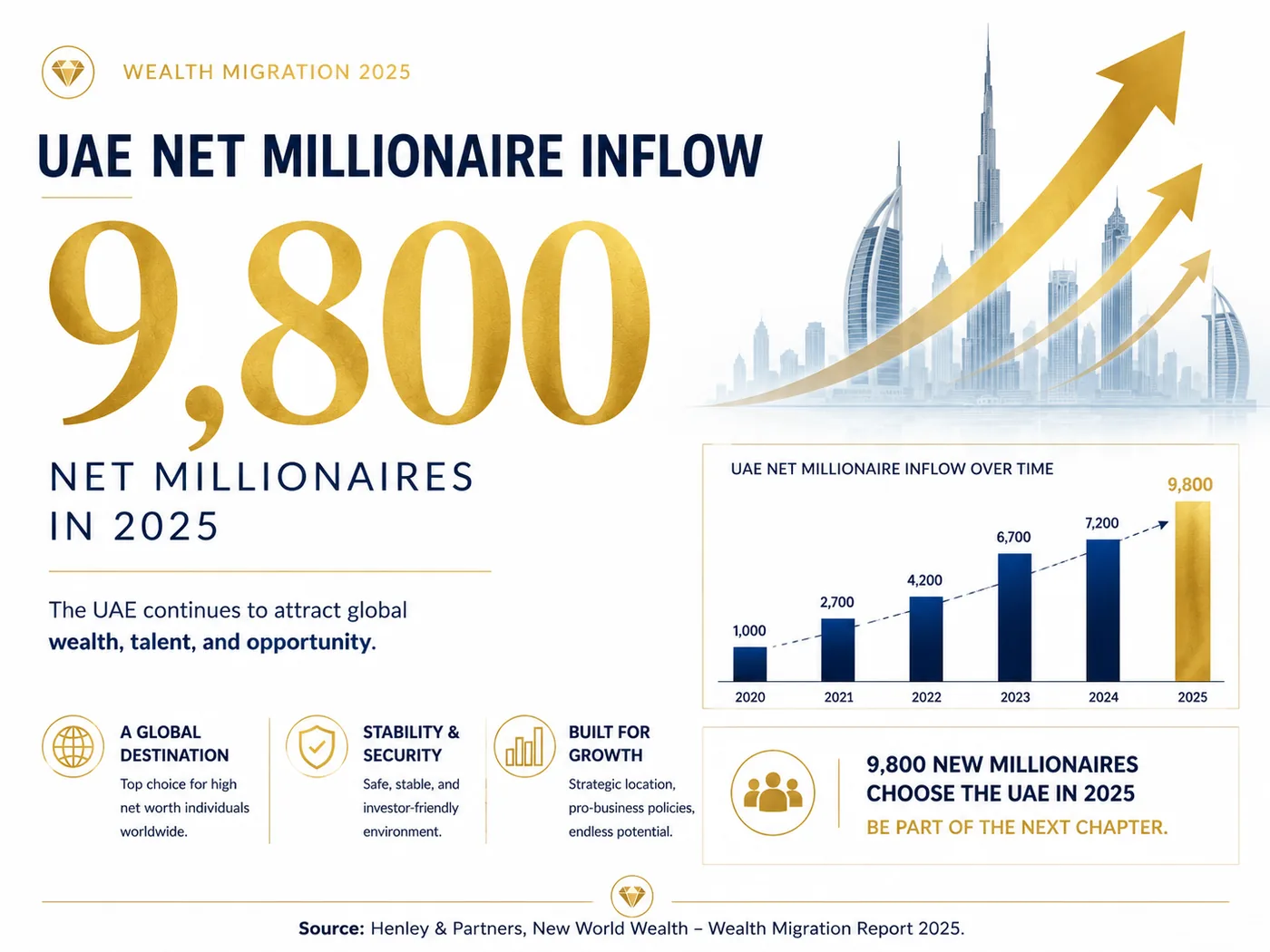
The UAE has recorded the largest net inflow of millionaires of any country in the world for four straight years, attracting an estimated 9,800 migrating millionaires in 2025, nearly triple the United States, its closest rival.
Net millionaire inflow measures the number of high-net-worth individuals relocating into a country minus those leaving. It’s one of the purest signals of where wealth believes its future lies, and the UAE has dominated it:
| Year | UAE net millionaire inflow | Global rank |
|---|---|---|
| 2022 | +5,200 | #1 |
| 2023 | +4,700 | #1 |
| 2024 | +6,700 (record at the time) | #1 |
| 2025 | +9,800 (~USD 63 billion in wealth) | #1 |
Source: Henley Private Wealth Migration Reports, 2024–2026 (data by New World Wealth).
That 2025 figure is worth pausing on. Around 9,800 millionaires carrying an estimated USD 63 billion in private wealth chose the Emirates as their new home in a single year. The United States (the world’s largest wealth-creation engine) placed a distant second at roughly 3,800. For a country of fewer than 11 million people to out-attract every major economy on the planet, year after year, is historically unusual.
The inflows have also broadened. Where UAE wealth migration was once dominated by arrivals from India, Russia, and the wider region, recent years have seen a marked rise in millionaires relocating from the United Kingdom and Europe, a direct response to rising taxes, the abolition of the UK’s non-dom regime, and fiscal uncertainty across the continent.
What’s actually driving the wealth boom?
Dubai’s wealth magnetism rests on four structural advantages: zero personal and capital-gains tax, long-term residence through the Golden Visa, a fast-maturing financial ecosystem, and world-class connectivity and safety.
None of these is a temporary incentive. Together they form a value proposition that competing hubs struggle to match.
Zero personal income tax
The headline draw remains the simplest one: the UAE levies no personal income tax and no capital-gains tax on individuals. For an entrepreneur or investor relocating from a jurisdiction with a 45–55% top marginal rate, the effect on lifetime wealth accumulation is enormous. A 9% federal corporate tax introduced in 2023 applies to business profits above a threshold, but for personal income and investment gains, the UAE remains one of the most efficient places on Earth to hold and grow wealth.
The Golden Visa
The UAE’s Golden Visa program offers five- and ten-year renewable residence to investors, entrepreneurs, and skilled professionals, decoupling residence from a specific employer and giving families long-term security. This single policy transformed the psychology of relocation: moving to Dubai is no longer a short-term tax play but a durable base from which to run a global life.
A family-office ecosystem managing ~USD 1.2 trillion
Perhaps the clearest sign that Dubai’s wealth is compounding rather than passing through is the explosion of family offices. The Dubai International Financial Centre (DIFC) is now home to more than 500 wealth and asset-management firms (up 22% in 2025) and over 1,289 family-related entities, with family offices there overseeing an estimated USD 1.2 trillion in assets. Dubai now hosts roughly three-quarters of the region’s family offices — the institutional infrastructure that keeps serious money rooted.
Connectivity, safety, and stability
Dubai sits within an eight-hour flight of roughly two-thirds of the world’s population, backed by two of the busiest international airports on the planet. Add high physical safety, political stability relative to much of the region, and a lifestyle offering that ranges from beaches to boardrooms, and the case compounds.
If you are planning to relocate your corporate assets, you can explore our comprehensive guide on [corporate setup and business structures in Dubai] to optimize your transition.
How does the wealth surge show up in Dubai’s property market?
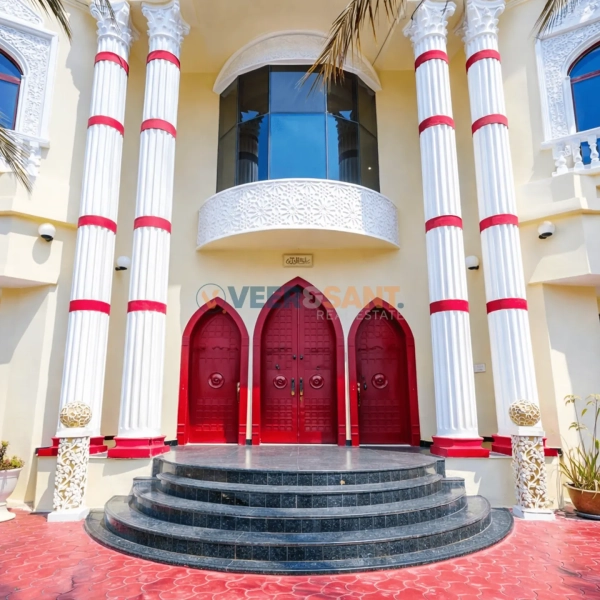
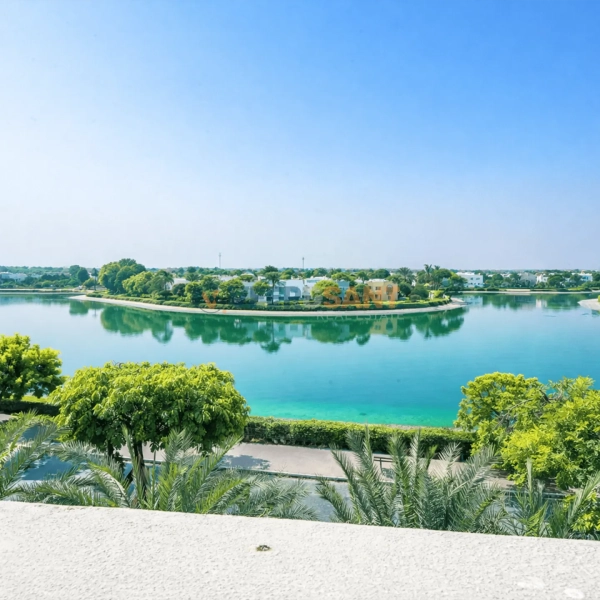
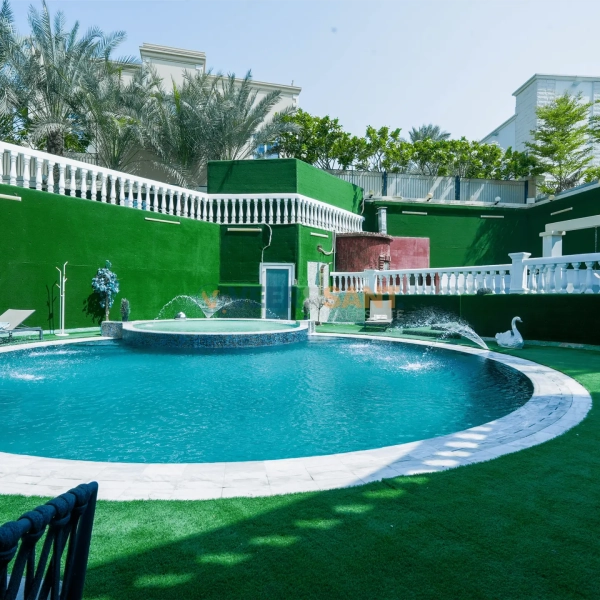
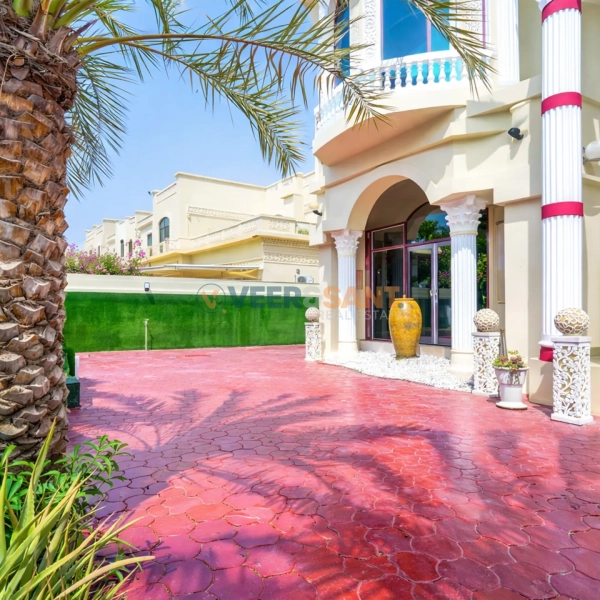
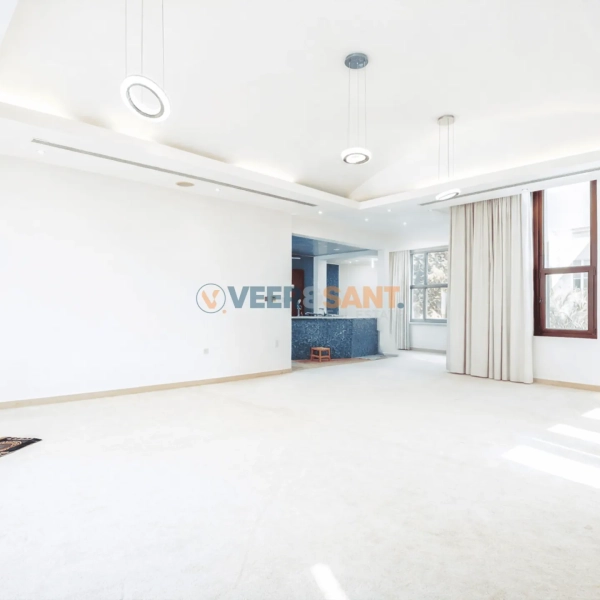
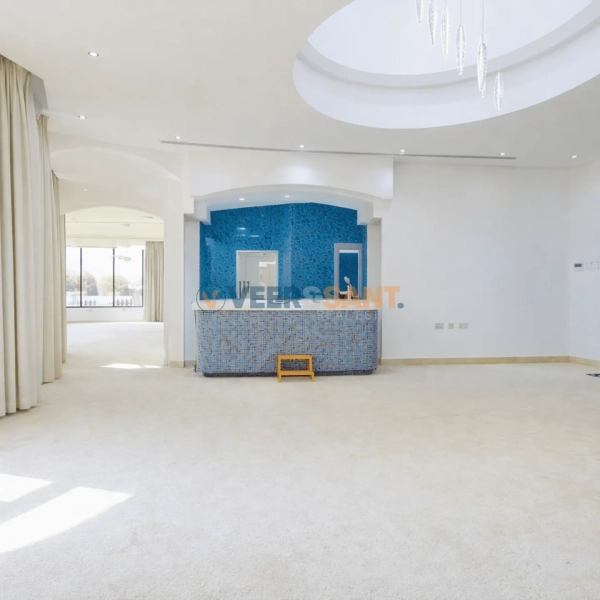
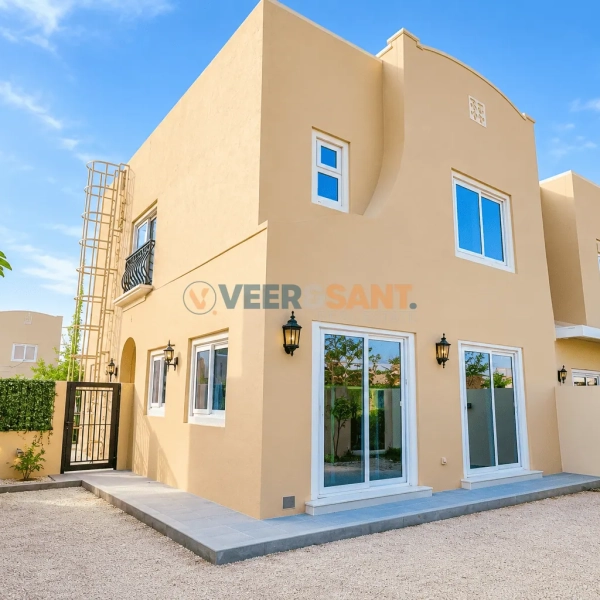
Dubai prime residential prices have risen about 147% over five years, and in 2025 Dubai was the world’s most active market for USD 10 million-plus “super-prime” home sales — a direct reflection of incoming millionaire capital.
When millionaires move, they buy homes, and Dubai’s real estate market has become the most visible expression of the wealth influx. According to Knight Frank’s research:
- Prime residential values across Dubai’s top neighborhoods have climbed roughly 147% since 2019–2020, one of the strongest runs of any global luxury market.
- In 2025, Dubai recorded around 500 super-prime (USD 10m+) sales, making it the most active ultra-luxury residential market in the world.
- Dubai led global luxury house-price growth with gains above 25% year-on-year at points during the cycle, far outpacing New York, London, and Singapore.
- Prime prices rose a further ~12% year-on-year heading into the end of 2025.
For investors, this is the feedback loop that matters: millionaire in-migration drives housing demand, which drives price appreciation, which attracts further capital and development. Rising millionaire density has historically been one of the most reliable leading indicators of long-term property performance, and Dubai is demonstrating it in real time.
How does Dubai compare to the world’s established wealth capitals?
Dubai is still smaller than New York, the Bay Area, Tokyo, and Singapore by absolute millionaire headcount — but it is growing faster than all of them, closing the gap each year.
| City | Resident millionaires | Billionaires | Decade growth |
|---|---|---|---|
| New York (US) | 384,500 | 66 | — |
| Bay Area (US) | 342,400 | 82 | +98% |
| Tokyo (Japan) | 292,300 | — | — |
| Singapore | 242,400 | — | +62% |
| Dubai (UAE) | 81,200 | 20 | +102% |
Source: Henley & Partners, World’s Wealthiest Cities Report 2025.
The story here is trajectory. The giants at the top of the table are mature markets adding wealth slowly; Dubai is a challenger compounding at more than double their rate. If current growth persists, Dubai’s climb up the global rankings is likely to continue through the rest of the decade.
Is the momentum sustainable, or is this a bubble?
In Henley’s 2026 competitiveness framework, the UAE scored 85.3 out of 100, among the highest of any country assessed — suggesting the wealth boom rests on durable structural strengths rather than a short-term cycle.
In 2026, Henley & Partners moved beyond simply counting inflows and introduced a Global Wealth Mobility Framework that scores jurisdictions across 12 weighted dimensions: tax treatment, rule of law, quality of life, investor pathways, family inclusion, geopolitical resilience, and more. The UAE’s score of 85.3/100 placed it near the very top of the global table.
There is a nuance worth being honest about. In the same 2026 report, Henley noted a 41% rise in enquiries from UAE-based individuals exploring second residences or citizenships, and a 29% rise in alternative-residence applications, amid regional geopolitical tensions. But Henley’s own reading is that this reflects diversification and contingency planning, wealthy residents adding a second passport as a hedge, rather than an exodus. Capital continues to compound inside the Emirates while families expand their global optionality. As the firm put it, the 2026 UAE story is “one of optionality, not an exodus.”
What does all this mean for investors and advisors?
For anyone advising high-net-worth clients or allocating capital, the UAE’s rise translates into several practical signals:
The relocation trend is structural, which means the demand base for premium real estate, private banking, wealth structuring, and lifestyle services is likely to keep expanding rather than mean-revert. The property market’s link to in-migration gives investors a data-backed thesis: track net millionaire inflows as a leading indicator of prime-market strength. And the family-office boom signals that money arriving in Dubai is increasingly being institutionalized and rooted locally, deepening the ecosystem for asset managers, lawyers, and advisors.
At the same time, prudent positioning means respecting the caveats: luxury markets can run hot, geopolitical risk in the region is real, and modelled wealth estimates are directional rather than precise. The strongest strategies treat Dubai not as a bet on a single number, but as exposure to a durable, decade-long shift in where global wealth chooses to live.
Frequently asked questions
How many millionaires live in Dubai in 2025?
Dubai is home to approximately 81,200 resident millionaires, including 237 centi-millionaires (worth USD 100 million or more) and 20 billionaires, according to Henley & Partners’ World’s Wealthiest Cities Report 2025.
Why are so many millionaires moving to Dubai?
The main reasons are zero personal income and capital-gains tax, the long-term Golden Visa residence program, a mature family-office and financial ecosystem, strong safety and global connectivity, and ( increasingly) as a hedge against rising taxes and instability in Europe and elsewhere.
Is the UAE really the number-one country for millionaire migration?
Yes. The UAE has recorded the world’s largest net inflow of millionaires for four consecutive years, attracting an estimated 9,800 in 2025 (nearly triple the United States, its nearest rival) according to Henley Private Wealth Migration data.
How much has Dubai’s luxury property market grown?
Prime residential prices in Dubai have risen roughly 147% over five years, and in 2025 Dubai was the world’s most active market for USD 10 million-plus home sales, per Knight Frank research.
Does Dubai have income tax?
No. The UAE levies no personal income tax and no capital-gains tax on individuals. A 9% federal corporate tax applies to business profits above a set threshold, but personal income and investment gains remain untaxed.